About the HUMAN-IT Action

Crafting next-generation human capital in the exponential digital era

HUMAN-IT (COST Action CA24167) is a four-year European research and innovation network that explores how exponential digital technologies are reshaping human capital, work, and the job market.

By bringing together scholars, practitioners, and policymakers from across Europe and beyond, the Action develops an integrative, cross-disciplinary approach to next-generation Human Resource Management (HRM), aligned with European policy priorities and the United Nations Sustainable Development Goals.

Funded by COST (European Cooperation in Science and Technology) and supported by the European Union
HUMAN-IT – Human and Digital Transformation

Why HUMAN-IT?

Understanding the context and challenges shaping the future of work, human capital, and Human Resource Management in Europe and beyond.

Exponential Digital Transformation

Artificial intelligence, automation, platform economies, and data-driven systems are rapidly reshaping how work is organised, performed, and governed.

Fragmented Knowledge and Silos

Research and practice on work, technology, and human capital remain fragmented across disciplines, sectors, and countries.

Changing Employee Experience

Remote and hybrid work, algorithmic management, and new skill demands are redefining employee experience, inclusion, and wellbeing.

Policy and Societal Relevance

Europe needs forward-looking HRM approaches aligned with inclusion, quality employment, and sustainable growth.

HUMAN-IT Mission & Vision

Shaping the future of human capital and HRM in Europe and beyond

The mission of HUMAN-IT is to develop and share an integrative approach to building exponential human capital, blending academic research and practitioner expertise to shape:

  1. The future employee experience
  2. New organizational and workplace models
  3. Resilient, inclusive job markets


The Action contributes to European employment, innovation, and inclusion policies, aligned with SDG 8 (Decent Work and Economic Growth) and SDG 9 (Industry, Innovation and Infrastructure).

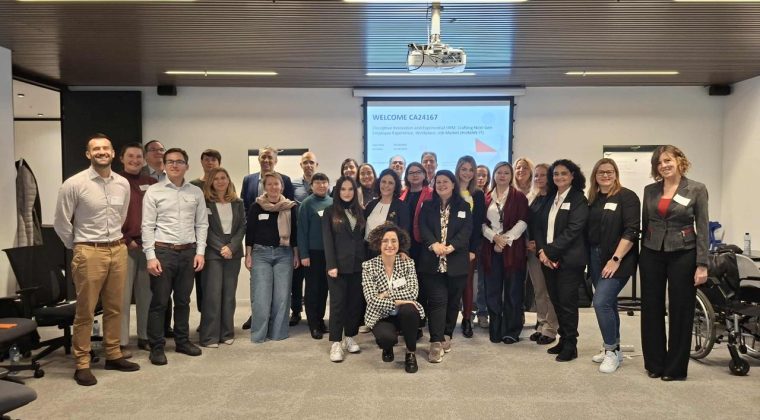
HUMAN-IT, First MC meeting Brussels 13 Oct, 2025

Specific Objectives

HUMAN-IT aims to develop, apply and share innovative HRM tools and knowledge across Europe.
Research icon

SO1: Innovative HR Tools

Develop and apply interdisciplinary HR methodologies, decision-support tools, and data visualization for human capital development.

Network icon

SO2: Collaborative Research Platform

Foster collaboration among academia, industry, and policy, creating a shared understanding of trends and collective intelligence.

Innovation icon

SO3: Cross-Disciplinary Innovation

Establish an interdisciplinary research space combining academic and practitioner contributions across COST member countries.

Awareness icon

SO4: Awareness & Dissemination

Raise awareness of exponential human capital, share best practices, and develop a common understanding of innovative HRM approaches.

Mentorship icon

SO5: Capacity Building

Support Young Researchers & Innovators through leadership, mentorship, and participation in high-impact research activities.

Inclusivity icon

SO6: Inclusiveness Target Countries

Promote participation from Inclusiveness Target Countries (ITCs), integrating scholars into leadership and facilitating knowledge exchange.

Expected Impact & Deliverables

HUMAN-IT will generate tangible results to advance HRM research, practice, and policy across Europe.

WG1 Icon

WG1: Digital HRM

Focus on disruptive integration of digital technologies in HRM systems. Deliverables include: science communication plan, review paper on exponential technologies, position paper, practitioner summaries, and webinars.

WG2 Icon

WG2: Employee Experience

Explore structural changes in organizational forms and employee experience. Deliverables include scientific papers, mindset building meetings, training materials, and case studies.

WG3 Icon

WG3: Societal & Policy Impact

Examine macro-level societal and policy implications of HRM transformation. Deliverables include surveys, practitioner summaries, education materials, community of practice model, and policy briefs.